
Coastal Seafood vs Andean Cuisine in Peru: A Comparison
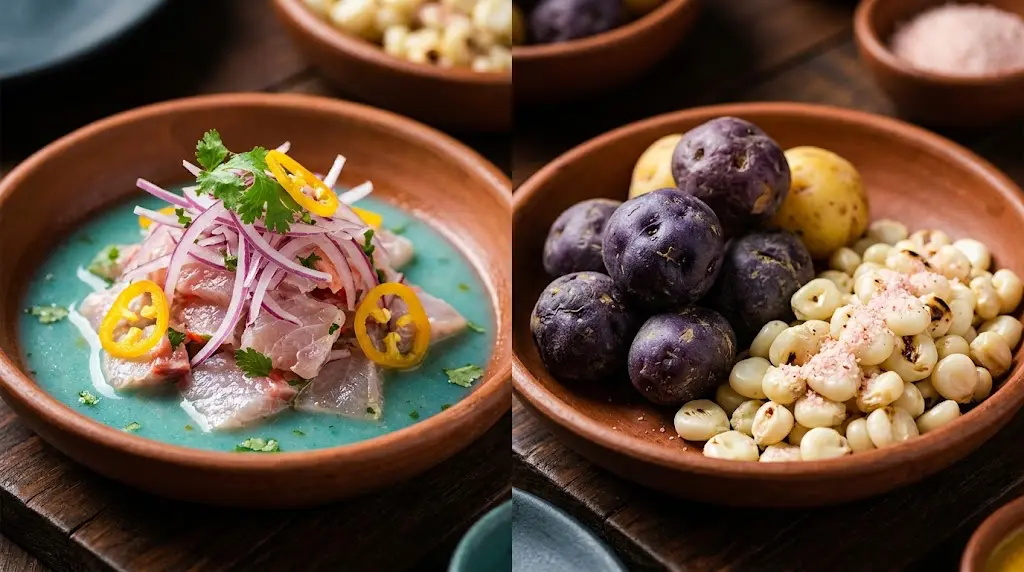
This gastronomic divide reflects environmental adaptation, cultural migration, and agricultural innovation over centuries. While coastal dining emphasizes raw preparations and vibrant acidity, mountain cooking relies on slow roasting, stone baking, and natural preservation techniques.
What defines the contrast in coastal seafood vs Andean cuisine in Peru?
The fundamental difference between coastal and mountain cooking lies in the natural resources provided by Peru’s extreme landscape variations.
Coastal gastronomy thrives on immediate freshness from the Pacific Ocean, utilizing citrus fruits, fresh herbs, and sea salt to highlight delicate fish textures. Conversely, Andean cuisine developed around high-altitude survival, prioritizing nutrient-dense grains, sun-dried meats, and heat-retaining clay pot cookery.
When planning a journey across key places to explore in Peru, travelers experience two completely different culinary philosophies.
Temperature and oxygen levels dictate cooking methods, forcing mountain chefs to adapt boiling points and fermentation techniques. What makes Peruvian gastronomy extraordinary is how these two worlds complement rather than compete with each other.
How do marine microclimates influence Lima’s ocean-to-table dishes?
Lima’s location along the Pacific coast grants access to the cold, nutrient-rich Humboldt Current, which supports one of the most productive marine ecosystems on Earth.
This cold water supply fuels a constant stream of flounder, sea bass, octopus, and sea urchins delivered directly to urban fish markets each morning.
- Leche de Tigre: The citrus-based spicy marinade used to cure fish, served as a refreshing tonic.
- Arroz con Mariscos: A rich, saffron-infused rice dish packed with fresh squid, mussels, and scallops.
- Chicharrón de Calamar: Crispy, golden-fried squid served with tart yucca and criolla onion relish.
Coastal chefs maintain a strict commitment to serving ceviche exclusively during daylight hours when catches are freshest. Immediate sea-to-table timelines define coastal quality, setting an uncompromising standard for marine preparation.
What makes Sacred Valley high-altitude farming essential to mountain food?
Rising thousands of feet above sea level, the Sacred Valley offers a fertile sanctuary sheltered by snow-capped peaks and irrigated by glacial rivers.
This unique climate allows farmers to cultivate rare heirloom crops that cannot survive in warmer coastal soils.
Agricultural biodiversity in action
Farmers in the valley steward thousands of native potato varieties, giant white corn with massive kernels, and high-protein pseudo-grains like kiwicha and quinoa. Tasting these native crops at their source reveals earthy, nutty flavors entirely absent from commercial produce.
Using artisan Maras pink spring salt for seasoning accentuates the complex starches of native potatoes, providing natural mineral depth to every traditional stew.
How do regional cooking techniques reflect Peru’s diverse geography?
Cooking methods in Peru evolved directly from the local materials and climatic conditions available in each distinct geographic zone.
Coastline cooks rely on rapid citrus curing and light pan-searing, while highland communities utilize thermal heat storage through underground ovens called Pachamancas.
- Earth-baked stone ovens trap heat to slow-roast seasoned meats and tubers underground.
- Dehydration techniques produce chuño, sun-dried potatoes preserved for long-term winter storage.
- Wood-fired clay pots simmer hearty soups like Parihuela on the coast and Chairo in the mountains.
Traditional cooking methods preserve cultural identity. Whether enjoying a chilled tiradito in Lima or a hot quinoa soup in Urubamba, every dish tells the story of human adaptation to Peru’s extraordinary terrain.